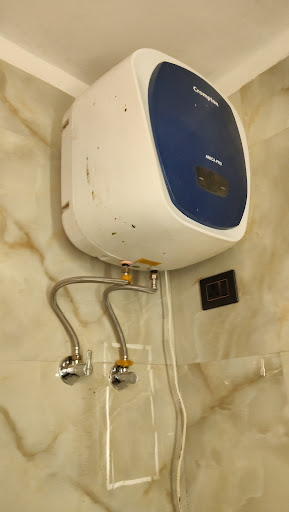
Preparation and Safety
Always turn off the main power and water supply before starting installation to prevent electric shock and flooding.
Use personal protective equipment like safety goggles and gloves.
Location and Space
Choose a location with enough space for the geyser and easy access for maintenance.
Install the geyser at a minimum height of 1.8 meters from the ground, away from wet areas like bathtubs and showers for safety.
Wall Mounting
Ensure the wall is strong enough to support the weight of the geyser when full of water.
Use a wall plate or mounting brackets, fixed securely with bolts. For hollow walls, reinforce with concrete before drilling and mounting.
Plumbing and Connections
Use copper pipes and proper fittings for inlet and outlet connections.
Apply Teflon tape to threaded joints to prevent leaks.
Install isolation valves for maintenance and pipe insulation to reduce heat loss.
Electrical Connection
Only connect to the electrical supply after all plumbing work is complete and checked for leaks.
Use proper electrical cables and connectors, following manufacturer and safety guidelines.
Professional Help
It is strongly recommended to hire a qualified electrician or plumber for installation to ensure safety and compliance with local regulations.
Final Checks
Double-check all connections, ensure the unit is level, and test for leaks before switching on the power and water supply.
Following these steps ensures safe and efficient geyser instal